
No products in the cart.
Home › Help & Guides › Door access control
Door Access Control Systems Explained
Quick answer
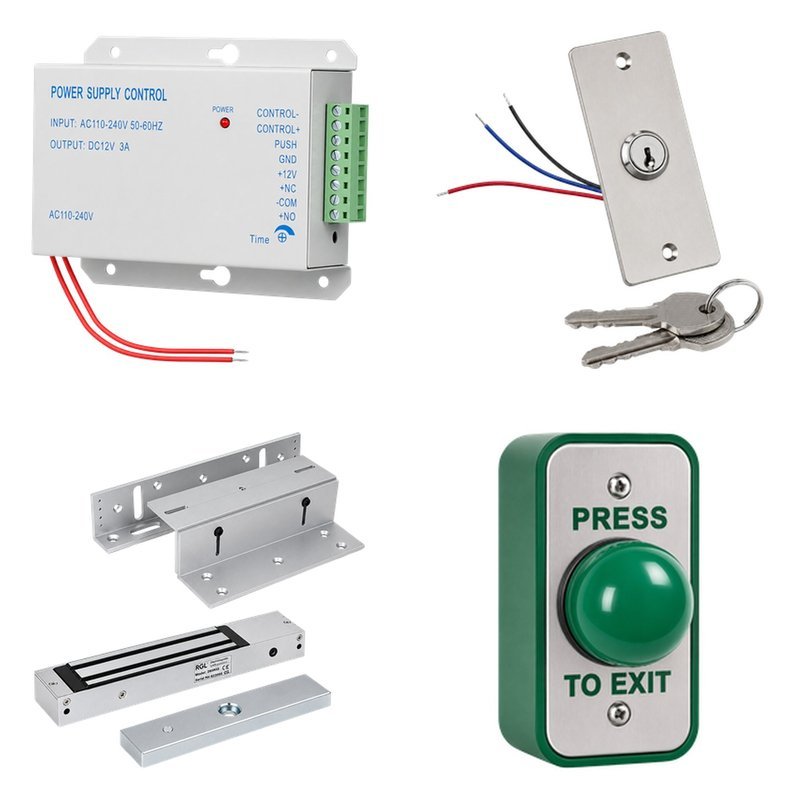
A door access control system is built from 7 parts: an electric lock (a maglock or an electric strike), a way in (a keypad or card reader), cards or fobs, a way out (an exit button), a power supply, a key override, and on escape routes a green emergency door release. For a single door, our magnetic door lock kit includes the maglock, power supply, key switch and exit button in one box. On an escape route, add a green emergency door release, which is not included in the kit. Doors that people use to escape in a fire must always unlock when the power fails or the fire alarm goes off, so check the design with your fire risk assessor.
Door access control lets you decide who can open a door and when, without handing out keys. Staff enter a code, show a card or press a button, and the door releases. It is used on shop and office entrances, staff-only doors, stock rooms, communal entrances to flats and gates.
This guide explains each part of a door access control system in plain English, compares maglocks with electric strikes, shows how to size the power supply, and sets out the fire safety points that matter on escape routes. It covers the standalone systems most small businesses and installers fit, where each door works on its own without a computer or network.
The 7 parts of a door access control system
| Part | What it does | Our product |
|---|---|---|
| Electric lock | Holds the door shut and releases it on command. | Maglock £65 or electric strike £74.99 |
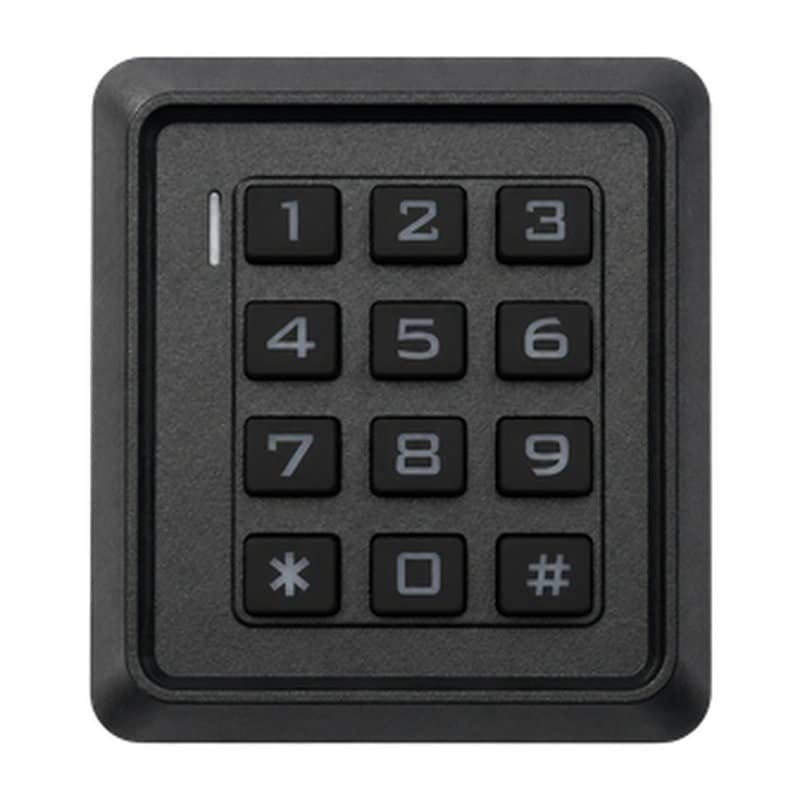
| Entry device | Checks the PIN code or card and tells the lock to release. | Keypad with card reader £59.50 |
| Credentials | The cards or fobs your staff carry. | 125kHz RFID card £7 |
| Exit device | Lets people out from the inside. | Exit button from £24.35 or touchless exit £70 |
| Power supply | Powers the lock and keypad, with a timer to hold the door open for a few seconds. | 12V 3A power supply £39.50 |
| Emergency release | A green break glass that cuts power to the lock in an emergency. | Emergency door release £19.50 |
| Key override | Lets a key holder release the door with a key. | Momentary key switch £26 |
Maglock or electric strike?
The lock is the most important choice in any door access control system. There are two main types.
Maglocks (magnetic locks)
A maglock is an electromagnet fixed to the door frame and a steel armature plate fixed to the door. While the magnet has power, the plate is held tight and the door stays shut. Cut the power and the door releases straight away. Maglocks have no moving parts, are quick to fit and do not need the frame cutting, which is why they are popular on aluminium shopfront doors. Our single door maglock has a 275kg (600lb) holding force and works on 12V or 24V DC. For a pair of doors, the double door magnetic lock has 2 x 600lb magnets in one 500mm housing.
Which holding force do you need? A 275kg (600lb) maglock is the usual choice for internal doors, staff doors and doors that also have a mechanical lock. Where a maglock is the only lock on an external door, manufacturers recommend a heavier magnet of around 500kg (1200lb). If that is your door, call us before you order.
Electric strikes
An electric strike replaces the strike plate in the door frame. The door keeps its normal latch or lock, and the strike’s keep releases electrically so the door can be pushed open. Strikes suit timber and aluminium doors with a latch, and they keep the door latched even if the closer is weak. Our 12/24V strike is fail safe, and an extension lip is available where the latch needs a longer lip to engage smoothly.
| Maglock | Electric strike | |
|---|---|---|
| Fitting | Surface fixed to the frame and door | Cut into the frame in place of the strike plate |
| Best for | Aluminium shopfronts, internal doors, pairs of doors | Timber and aluminium doors with a latch |
| On power loss | Releases (fail safe) | Fail safe or fail secure, depending on the model |
| Needs a good door closer? | Yes, the door must close fully onto the magnet | Less critical, the latch holds the door |
Fail safe or fail secure?
Fail safe means the lock opens when the power is cut. Fail secure means it stays locked when the power is cut. Maglocks are always fail safe, because a magnet cannot hold without power. Electric strikes come in both versions.
If the electric lock is the thing that would stop someone getting out of a building, it must be fail safe, so that a power cut or fault can never trap people inside. A fail secure strike is normally only used where people can always get out using a mechanical handle or exit device on the inside. If you are unsure, choose fail safe and ask your fire risk assessor.
Door access control on fire escape routes
This is the part that matters most. When a door on an escape route is electrically locked, the lock must release:
- when the fire alarm goes off,
- when the power fails or the system develops a fault, and
- when someone operates a green emergency door release next to the door.
The emergency release must be green, not red, so it is never confused with a fire alarm call point, and it must cut the power to the lock directly. Some fire authorities also require a double-pole release. A normal exit button is not enough on its own, because a fault in the access control system could stop it working. Our green resettable emergency door release is designed for this job.
The British Standard that covers how fire alarms release doors is BS 7273-4, and its latest update points to BS EN 13637 for electrically controlled exit systems. Which category applies depends on the building and who uses it, and in some public buildings fire services do not accept electrically locked escape doors at all. That is why every escape door needs to be checked by the person responsible for fire safety, normally through the fire risk assessment, and by building control on new work. The Fire Industry Association and the Door and Hardware Federation both publish guidance for installers.
Important: this guide is general information to help you choose parts. It is not a fire safety design. Always follow the fire risk assessment for the building and use a competent installer.
Choosing the right power supply
- Match the voltage. Every part must run on the same voltage. Our kits and power supply are 12V DC.
- Add up the current. A typical 600lb maglock draws around 0.5A at 12V. Add the keypad, exit sensor and anything else you will power.
- Leave headroom. Keep the total at about 70 to 80 percent of the power supply rating. Our 12V 3A power supply comfortably runs a maglock, keypad and exit button.
- Use an access control power supply. It gives a steady regulated output and has lock, push button and release timer terminals, so the door stays open for a set time after someone presses the button.
- Protect against voltage spikes. Fit the suppression the lock manufacturer specifies. Many maglocks have it built in.
- Battery backup is optional. It keeps the door locked during a mains power cut. Only use it on an escape door if the fire risk assessment allows it, and the fire alarm and green emergency release must still release the lock.
Exit buttons and touchless exit
Every access controlled door needs a way to get out from the inside. A green dome slim exit button (39mm wide, IP66) fits narrow shopfront mullions, and the wide exit button fits a standard UK single gang back box. The touchless exit button releases the door with a wave of the hand from 3 to 30cm, which is popular in kitchens, clinics and anywhere hygiene matters. Fit exit devices and emergency releases at a height everyone, including wheelchair users, can reach.
Keypads, cards and fobs
A standalone keypad stores codes and cards at the door, so you need no computer or software. Our access control keypad takes both a PIN code and 125kHz RFID cards, which suits most shops, offices and staff doors. Be aware that 125kHz proximity cards are not encrypted and can be copied, so for high security areas installers use encrypted cards such as MIFARE DESFire on a networked or cloud system. Networked systems also keep a log of who opened which door and when, and let you add or remove users from one place.
Fitting tips and common mistakes
- Use the right bracket. On an outward opening door the maglock fits under the frame head. On an inward opening door use a Z & L bracket, which our single maglock includes. Frameless glass doors need special glass door brackets.
- Do not over-tighten the armature plate. It is designed to float slightly so it sits flat on the magnet.
- Keep the magnet face clean. Dust or paint on the face reduces the holding force.
- Fit a good door closer. A maglock only holds if the door closes fully onto it. See our door closers.
- Check voltage drop on long cable runs. Thin cable over a long distance can leave the lock under-powered.
- Test everything after fitting. Test the keypad, exit button, emergency release and fire alarm release several times.
Access control runs on low voltage, but the power supply connects to mains, so isolate the supply before working on it. For electrical safety advice see Electrical Safety First.
Products in this guide
Single Door Maglock KitMaglock, PSU, key switch, exit button£130.00
 Double Door Maglock KitFor pairs of doors£160.00
Access Control KeypadPIN code and RFID card£59.50
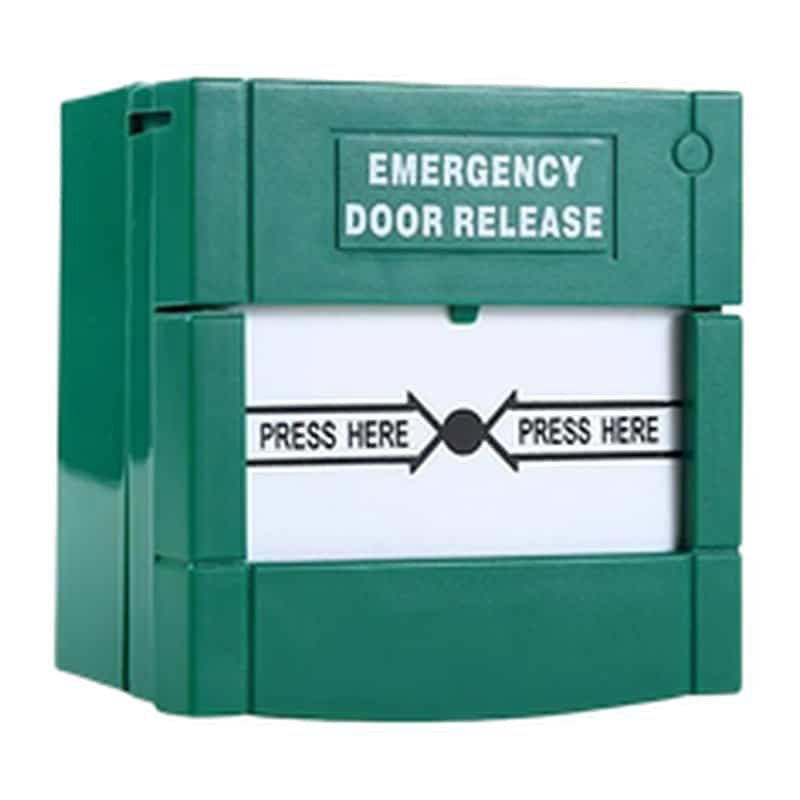 Emergency Door ReleaseGreen, resettable£19.50
 Access Control Power Supply12V 3A with release timer£39.50
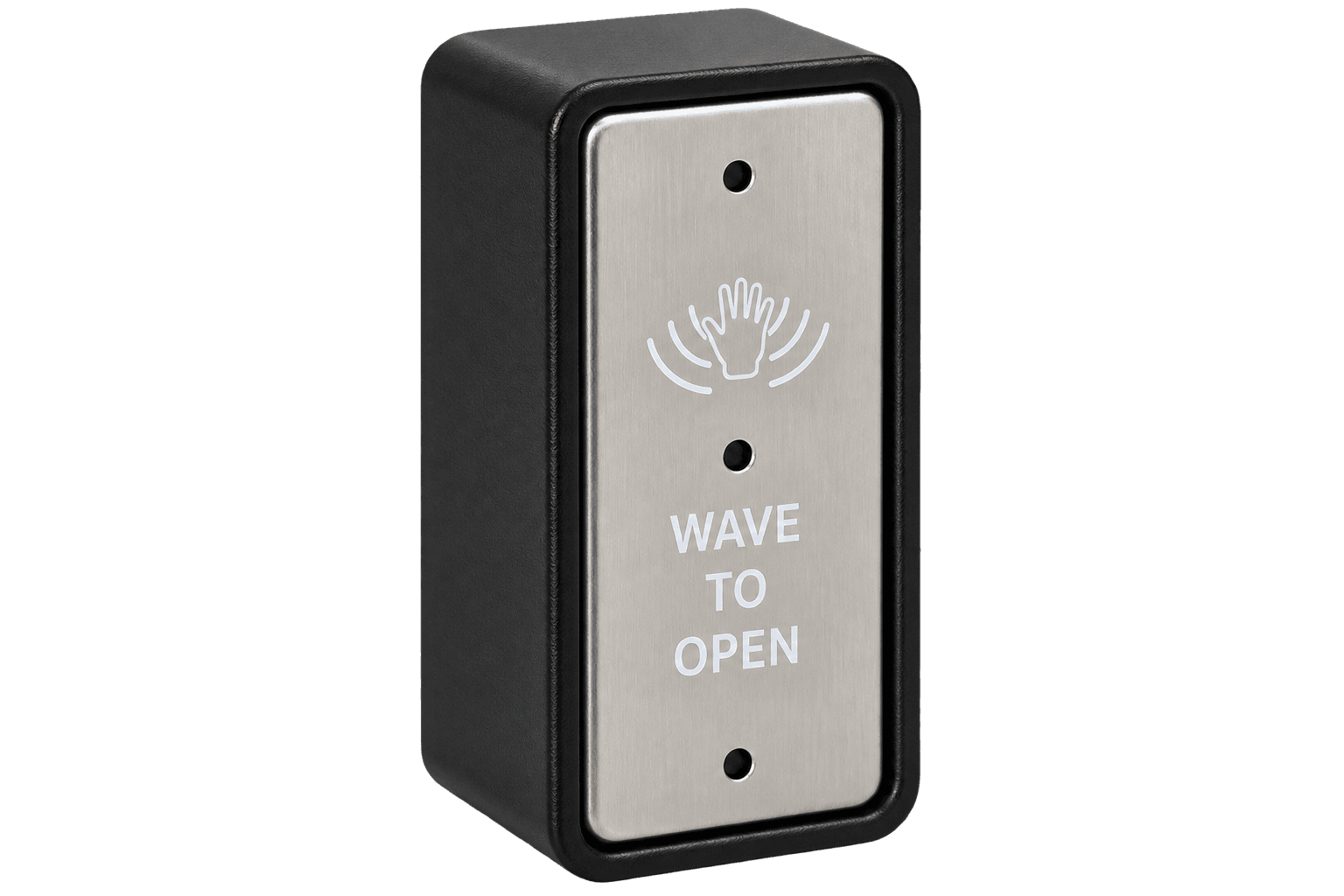 Touchless Exit ButtonWave to open, 3–30cm£70.00
Frequently asked questions
Can I put a maglock on a fire exit door?
Sometimes, but only if the fire risk assessment allows it. The maglock must release when the fire alarm goes off, when the power fails and when the green emergency release is used. Some public buildings do not allow electrically locked escape doors, so always check first.
What happens to a maglock in a power cut?
It releases and the door opens freely, because a maglock needs power to hold. A power supply with battery backup keeps it locked during a power cut. On an escape door, only do this if the fire risk assessment allows it, and the fire alarm and green emergency release must still open the door.
What holding force do I need?
A 275kg (600lb) maglock suits most internal and staff doors. Where a maglock is the only lock on an external door, a stronger magnet of around 500kg (1200lb) is recommended.
Maglock or electric strike, which is better?
Maglocks are quicker to fit and suit aluminium shopfronts and pairs of doors. Electric strikes suit doors that already have a latch or lock and keep the door latched shut.
Why do I need a green break glass as well as an exit button?
The green emergency door release cuts power to the lock directly, so it still works if the access control system develops a fault. An exit button relies on the system working.
What size power supply do I need?
Add up the current of every device and keep it to about 70 to 80 percent of the power supply rating. A single maglock, keypad and exit button run comfortably on our 12V 3A supply.
Are 125kHz cards secure?
They are fine for most small business doors, but they are not encrypted and can be copied. For high security areas, use an encrypted card system such as MIFARE DESFire.
Need help planning a door?
Send a photo of the door and frame on WhatsApp, or call us. Tell us whether it is an escape route, and we will help you pick the right lock, power supply and exit devices.
More help: all Help & Guides · shop access control · shop electric locking