
No products in the cart.
Home › Help & Guides › Glass door patch fittings
Glass Door Patch Fittings: Which Do I Need?
Quick answer
Every frameless glass door needs 2 glass door patch fittings as a minimum (unless its closer has its own bottom fitting): a bottom patch that sits on a floor spring or floor pivot, and a top patch that turns on a top pivot. What you add next depends on the glass around the door. A door between two walls needs a top pivot in the head. A door under a glass overpanel needs an overpanel patch with pivot. A door under an overpanel that meets a glass side panel on the hinge side needs a corner transom patch with pivot. Then add a lock and a strike box. Use the 5 parts lists below to pick the right set.
Glass door patch fittings are the clamp-on fittings that hold a frameless toughened glass door, so there is no frame around the glass. They clamp onto the glass at the corners and connect it to the floor spring, the pivot and the glass panels around it. They are used on shopfronts, office entrances, restaurants and internal glass partitions.
The hard part is not fitting them. It is knowing which ones to order. This guide explains what each fitting does, gives a parts list for the 5 most common door set-ups, and covers the glass, floor spring and measuring checks that installers get caught out by. Our patch fittings suit 10mm and 12mm toughened glass, and most come in a satin stainless finish.
What each glass door patch fitting does
| Fitting | What it does | Price |
|---|---|---|
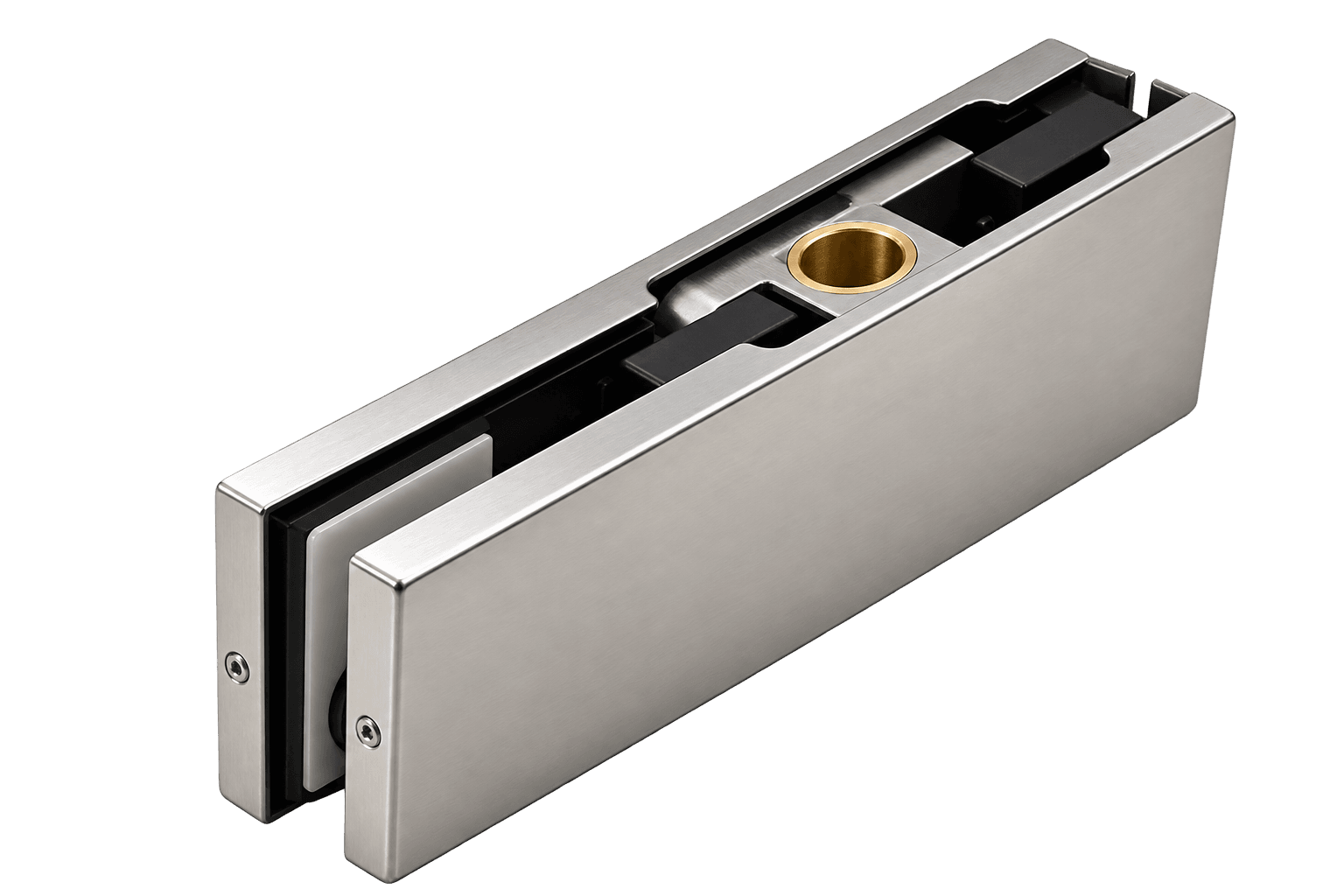
| Bottom patch | Clamps the bottom corner of the door and locates onto the floor spring or floor pivot spindle. | £26.50 |
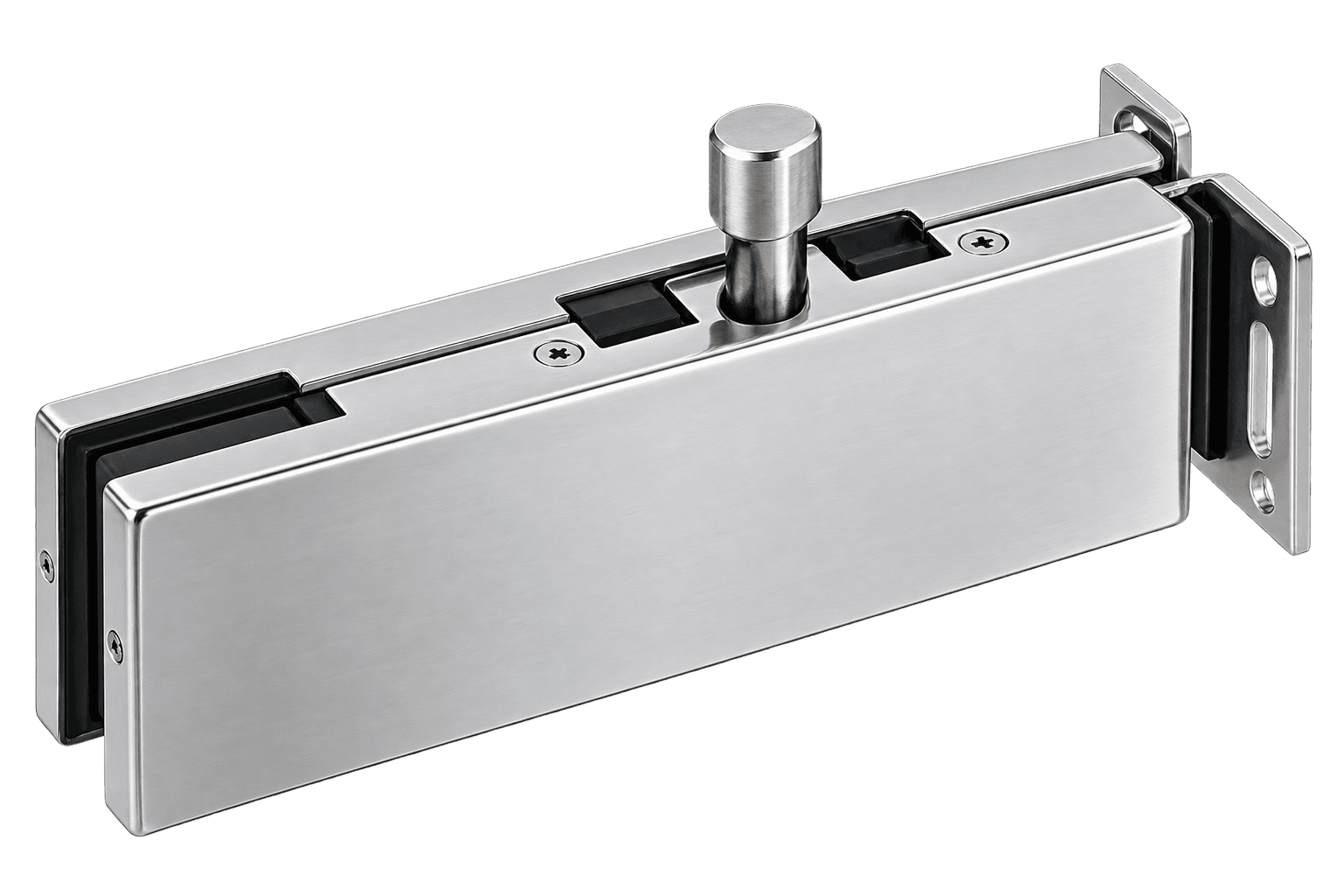
| Top patch | Clamps the top corner of the door on the hinge side and turns on the pivot above it. | £26.50 |
| Top pivot | The pin fixed into the head, frame or ceiling that the top patch turns on. Used when there is no glass overpanel. | £15.50 |
| Floor pivot | A simple stainless floor spindle. The door swings freely but does not close itself. A low-cost alternative to a floor spring. | £16.50 |
| Overpanel patch with pivot | Clamps the fixed glass overpanel, fixes to the wall or frame, and carries the pivot for the top of the door. | £34.49 |
| Corner transom patch with pivot | Joins the overpanel to a glass side panel at the corner and carries the door pivot. | £26.50 |
| Fin patch with pivot | Joins the overpanel to a glass fin on tall all-glass entrances. Handed, so order left or right. | £34.50 |
| T connector | Joins the overpanel to a central fixed panel, with 2 pivots so a door can hang on each side. | £34.50 |
| Patch lock | Locks the door at the top or bottom rail. 3 keys included. | £30.49 |
| Centre patch lock | A pin bolt lock with a euro cylinder, used to lock a pair of glass doors together. | £32.49 |
| Strike box and corner strike box | The keep that the lock bolt shoots into, fitted to the opposite door or the fixed glass. | from £22.00 |
| Door stopper | Stops the door swinging past closed, protecting the glass and the floor spring. | from £12.00 |
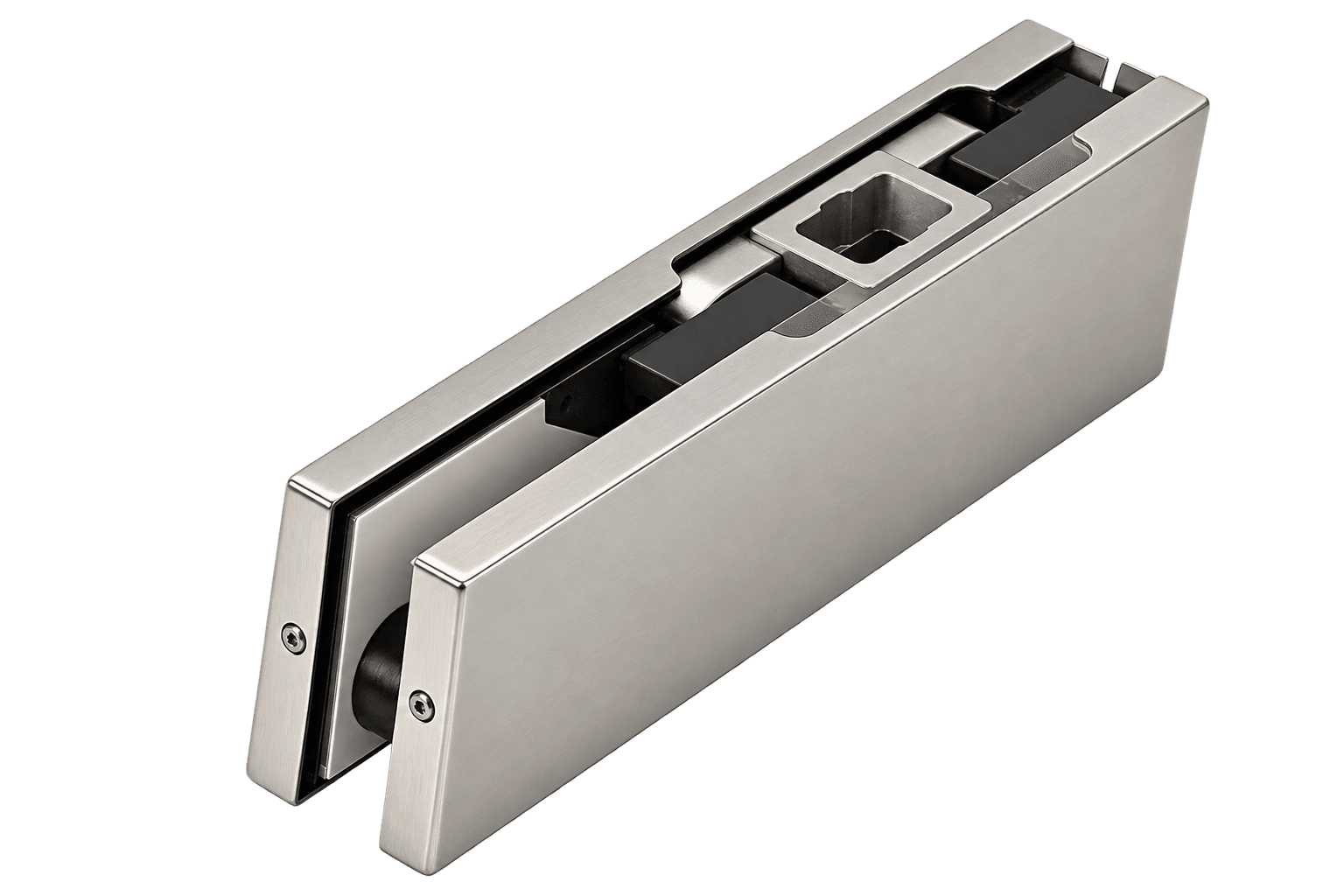
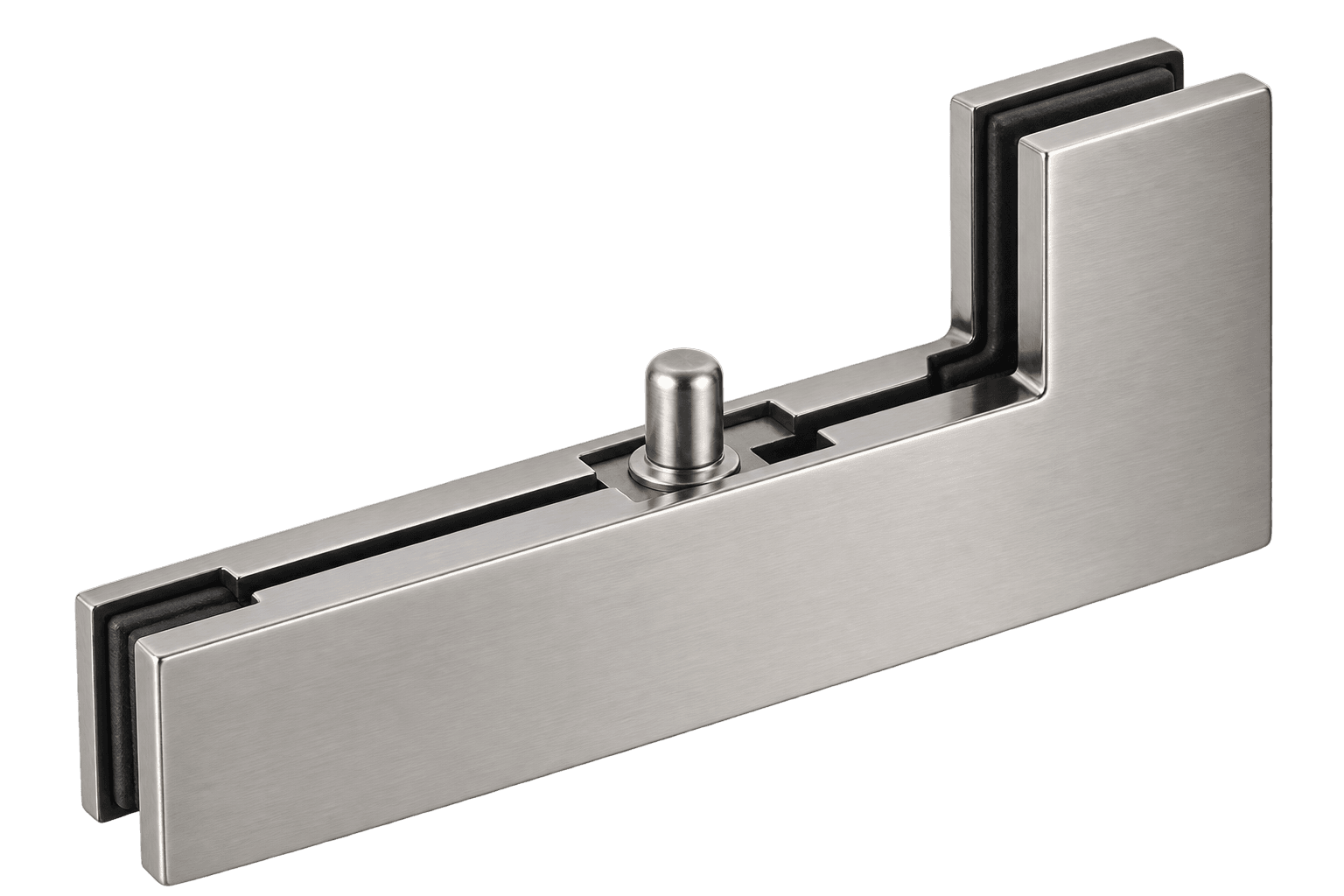
Parts lists for 5 common glass door set-ups
Find the set-up that matches your doorway, then order the parts in that row. If your opening does not match any of these, send us a photo and we will build the list for you.
1. Single door between two walls, no overpanel
The simplest frameless door. The glass door sits in the opening with a solid head above it.
- 1 x floor spring, or a non digging floor spring, or a floor pivot if the door does not need to close itself
- 1 x bottom patch (not needed with the non digging floor spring, which clamps onto the glass itself)
- 1 x top patch (or the non dig closer top fitting)
- 1 x top pivot fixed into the head
- Optional: patch lock and a pull handle
2. Single door with a glass overpanel
A fixed glass panel above the door. The overpanel fitting replaces the top pivot.
- Floor spring and bottom patch, as above
- 1 x top patch
- 1 x overpanel patch with pivot on the hinge side
- Wall to glass clamps or a channel to hold the overpanel at the other end
- Optional: patch lock with a strike box on the overpanel, and a door stopper
3. Single door with an overpanel and side panel
Typical of all-glass shopfronts. The overpanel meets a glass side panel at a corner. The parts depend on which side of the door the side panel is on.
Side panel on the hinge side:
- Floor spring, bottom patch and top patch
- 1 x corner transom patch with pivot (or the right hand overpanel patch) where the overpanel meets the side panel
- Wall to glass clamps or a channel to hold the overpanel where it meets the wall on the lock side
- Optional: patch lock with a strike box
Side panel on the lock side:
- Floor spring, bottom patch and top patch
- 1 x overpanel patch with pivot on the hinge side, fixed to the wall
- 1 x corner strike box where the overpanel meets the side panel, if you fit a patch lock
In both cases, hold the side panel with glass corner clamps, wall clamps or a channel. If you have side panels on both sides, send us a photo and we will list the parts.
4. Double glass doors with an overpanel
A pair of doors meeting in the middle under one overpanel.
- 2 x floor springs, 2 x bottom patches and 2 x top patches
- 2 x overpanel or corner transom patches with pivot, one for each door
- Either a centre patch lock with a centre strike patch, or a double door top lock
- 1 x double door stopper
If a fixed glass panel sits between the 2 doors instead, use a T connector on the centre panel in place of the 2 overpanel patches, so each door hangs from it, and lock each door at its outer edge. Ask us for the full parts list for this layout.
5. Tall entrances with glass fins
Very tall frameless entrances often use glass fins at right angles to stiffen the screen.
- The parts from set-up 2, 3 or 4
- Right hand or left hand fin patch with pivot where the overpanel meets a fin
- A fin stopper patch where a door closes against a fin
Glass requirements for patch fittings
Patch fittings must only be used on toughened safety glass. Toughened glass cannot be cut, drilled or notched after it has been toughened, so every hole, cut-out and notch for the fittings must be made by the glass processor before toughening. Send the fitting templates to your glass supplier with the order.
- Thickness: our glass door patch fittings take 10mm or 12mm toughened glass. Use 12mm for tall or wide doors.
- Weight: our standard top patch, overpanel patch and patch locks are rated for doors up to 130kg. Our non digging floor spring suits doors up to 80kg, 1000mm wide and 3000mm high. Very heavy or wide doors usually need a rail system rather than patches.
- Safety glass rules: glass in doors, and in side panels within 300mm of a door up to 1500mm from the floor, is a critical location under the Building Regulations (Approved Document K). It must be safety glass classified to BS EN 12600 and permanently marked. Toughened glass is made to BS EN 12150.
- Clamping area: the glass under each patch must be flat, clean and undamaged. Never fit a patch over a chipped edge.
For more on choosing and installing glass safely, the Glass and Glazing Federation publishes guidance for the trade.
Floor spring, non dig closer or floor pivot?
| Option | Self-closing? | Floor work | Best for |
|---|---|---|---|
| Floor spring (£99.99) | Yes | Cement box set into the floor | New builds and busy entrances |
| Non digging floor spring (£49.50) | Yes | None, fixes to the floor surface | Refits, tiled floors and underfloor heating, doors up to 80kg |
| Floor pivot (£16.50) | No | Small fixing in the floor | Internal doors that do not need to close themselves |
If the door sits on a door closer in the head instead, such as a transom closer, use our transom closer top mount to connect it to the top patch.
Check these before you order
- Glass thickness. Measure it. Our fittings suit 10mm and 12mm glass and come with gaskets.
- Door weight and size. Work out the weight of the glass and keep it within the rating of the floor spring and fittings.
- What is around the door. Solid head, glass overpanel, side panel or fin. This decides which top fitting you need.
- Left or right hand. Fin patches and top locks are handed. Stand on the side the door opens towards to check which side the hinge is on.
- Pivot alignment. The top pivot must sit directly above the floor spring spindle. Installers use a plumb line to line them up, or the door will drift open or closed.
- Existing hardware. If you are replacing a fitting, compare the cut-out in your glass with ours before ordering. Send us a photo if you are unsure.
Satin or polished stainless?
Our glass door patch fittings come in a satin stainless finish, the most common choice for shopfronts and offices. Some fittings, such as the double door stopper, are also available polished. Keep all the fittings on one door in the same finish so they match. Clean stainless with warm soapy water and a soft cloth, wiping along the grain, and never use wire wool.
Products in this guide
Bottom Patch FittingFor floor spring or pivot, 10–12mm£26.50
 Top Patch FittingDoors up to 130kg£26.50
 Overpanel Patch with PivotOverpanel to wall£34.49
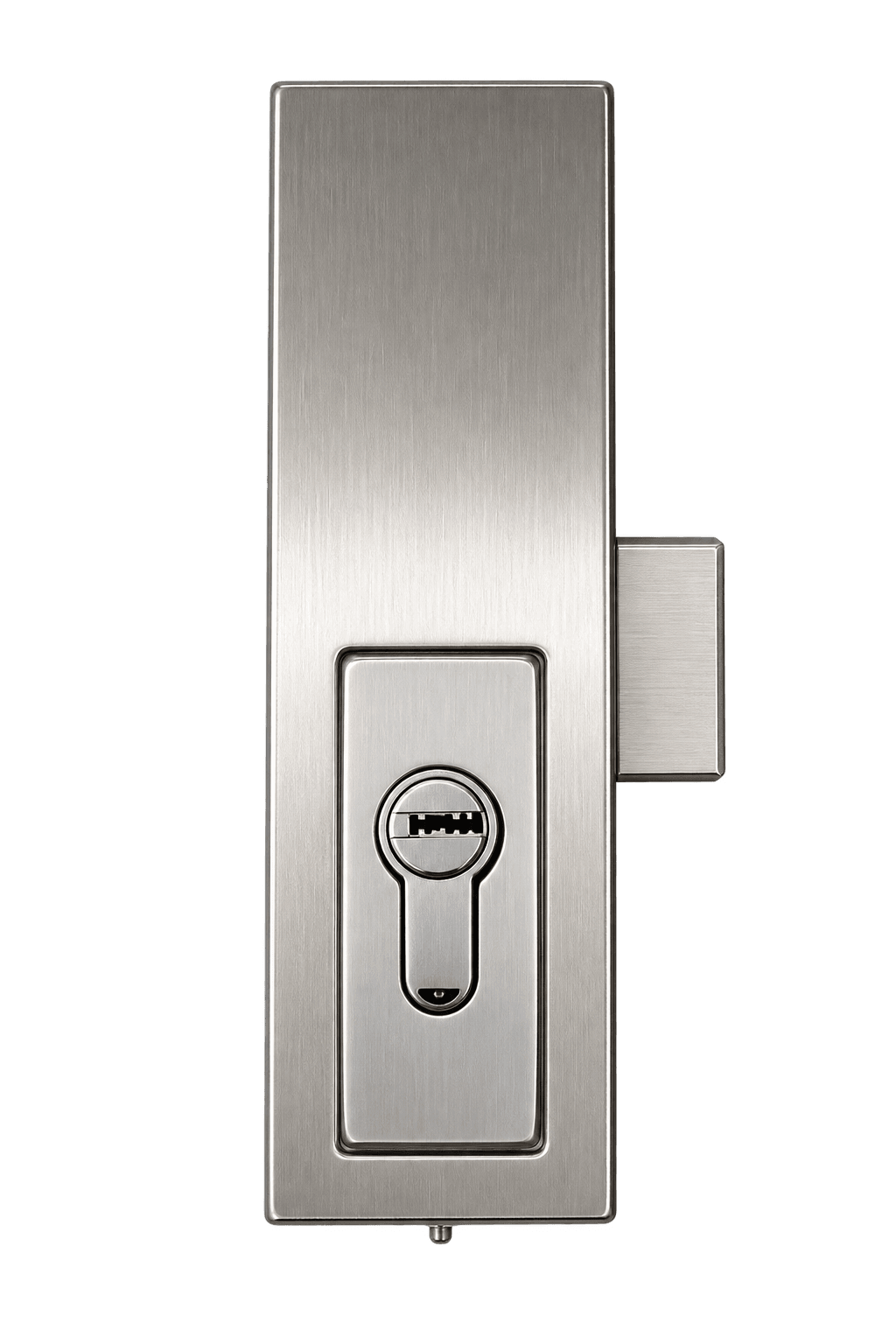 Glass Door Patch LockTop or bottom rail, 3 keys£30.49
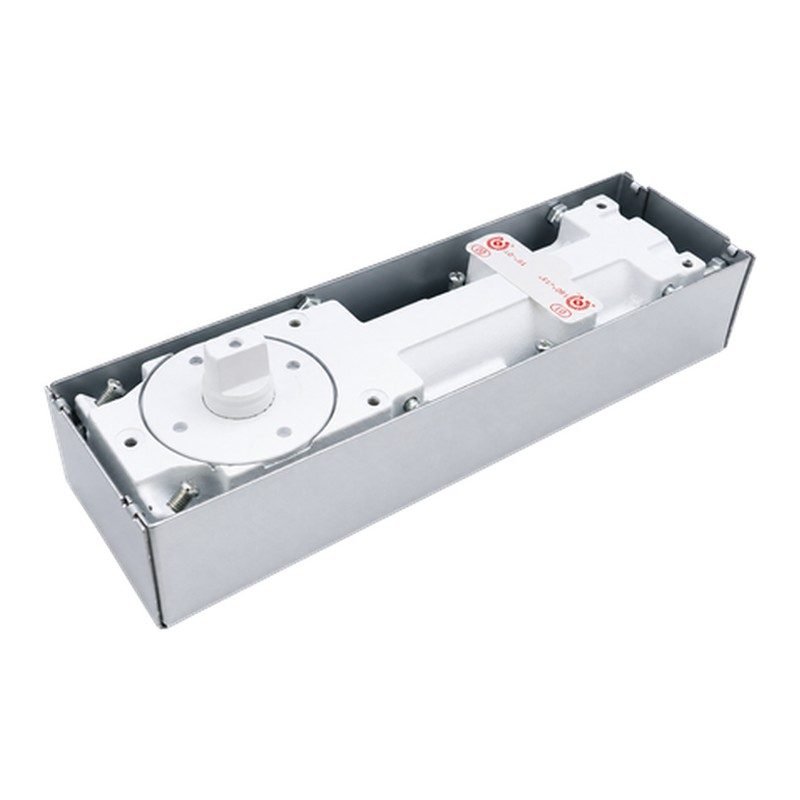 Glass Door Floor SpringMedium duty£99.99
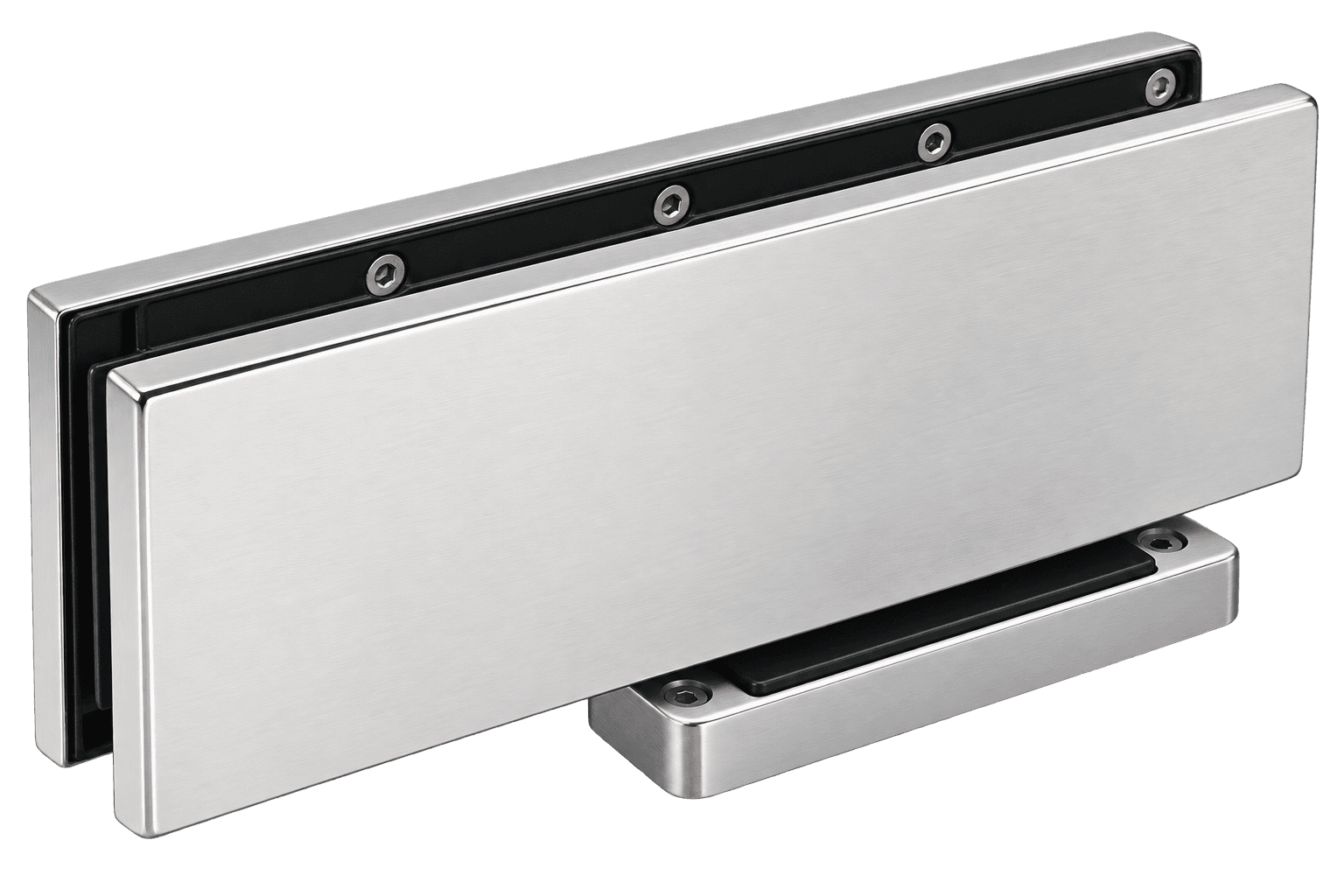 Non Digging Floor SpringNo floor cutting, up to 80kg£49.50
Frequently asked questions
How many patch fittings does a glass door need?
At least 2: a bottom patch on the floor spring or pivot, and a top patch at the top hinge corner. Most doors also have an overpanel or corner fitting to carry the top pivot, plus a lock and strike box.
Can I drill or cut my glass door after it is toughened?
No. Toughened glass will shatter if it is cut or drilled. All holes and cut-outs for the fittings must be made before the glass is toughened.
What thickness of glass do patch fittings take?
Our glass door patch fittings suit 10mm and 12mm toughened glass. Check the gaskets match your glass thickness so the clamp grips evenly.
Do I need a floor spring?
Only if you want the door to close itself. A floor spring is set into the floor. A non digging floor spring fixes to the floor surface, and a floor pivot lets the door swing without closing it.
What do I need for an overpanel or side panel?
Use an overpanel patch with pivot for a glass overpanel, and a corner transom patch where the overpanel meets a glass side panel. Use glass clamps to hold the fixed panels.
How do I lock a pair of frameless glass doors?
Fit a centre patch lock with a centre strike patch, or a double door top lock. Add a double door stopper so the doors close in line.
Are your patch fittings compatible with other brands?
Our standard patches use the widely used PT-style glass cut-out found on many frameless doors, but makers differ. Always compare the glass cut-out on your door with the fitting before ordering, or send us a photo and we will check.
Not sure which fittings you need?
Send a photo of your glass door, the opening and any old fittings on WhatsApp, or call us. We will send you a full parts list for your door.
More help: all Help & Guides · shop patch fittings · shop door closers